

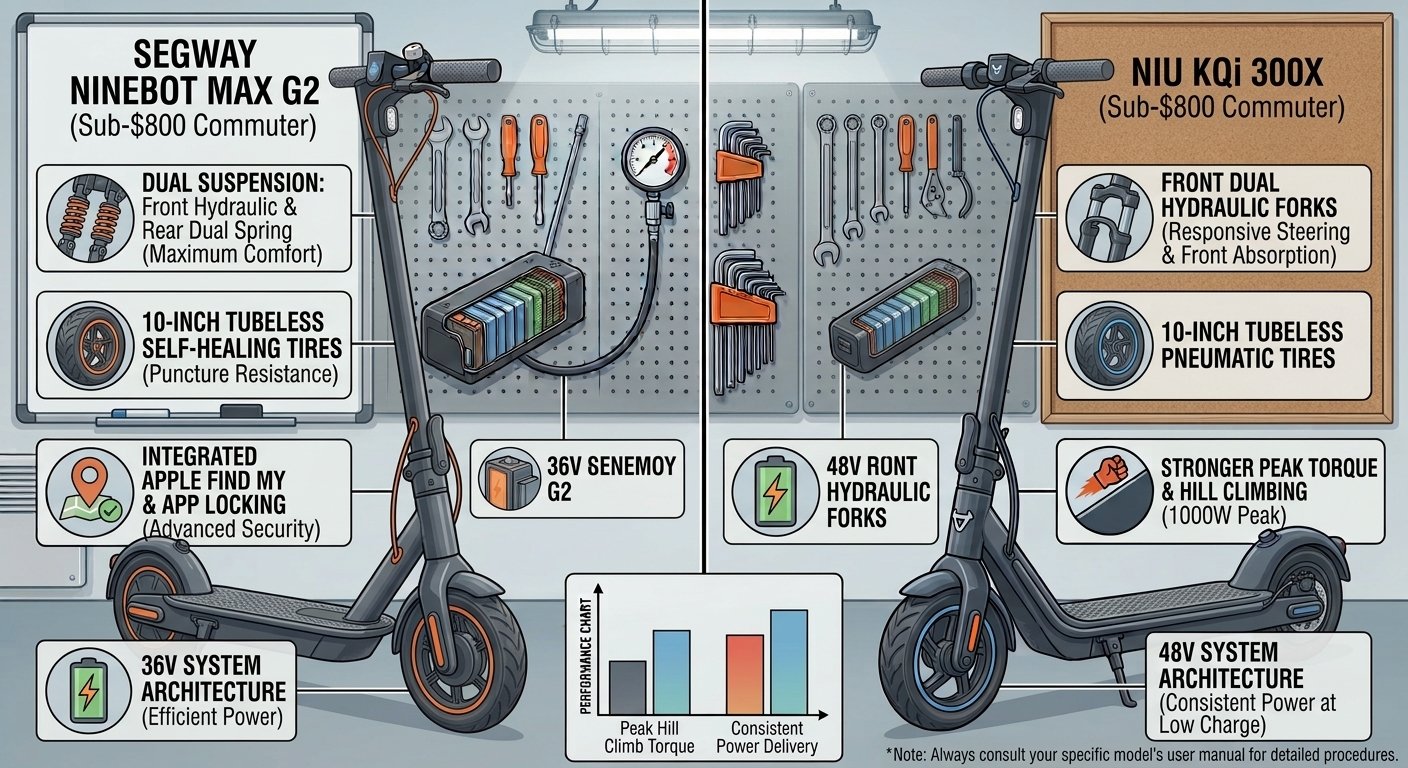
Navigating the budget-friendly electric scooter market requires balancing upfront costs against daily reliability, comfort, and real-world performance. Under $800, models like the Segway Ninebot Max G2 and NIU KQi 300X set the industry standard by bringing premium features to mid-tier commuters. Before purchasing, riders should evaluate five core factors to select the optimal model for their daily travel.
1. Battery Architecture: 36V vs. 48V Systems
Battery voltage directly influences how consistent power delivery feels as charge levels drop.
- 36V Systems (e.g., Segway Max G2): Highly efficient for flat city commutes. While efficient, speed and torque noticeably decrease once the battery drops below 50% capacity.
- 48V Systems (e.g., NIU KQi 300X): Maintains consistent top speed and hill-climbing acceleration even at lower charge states (20% to 30%).
2. Suspension Types: Single vs. Dual Suspension
Proper suspension protects structural components from vibration while drastically reducing rider fatigue.
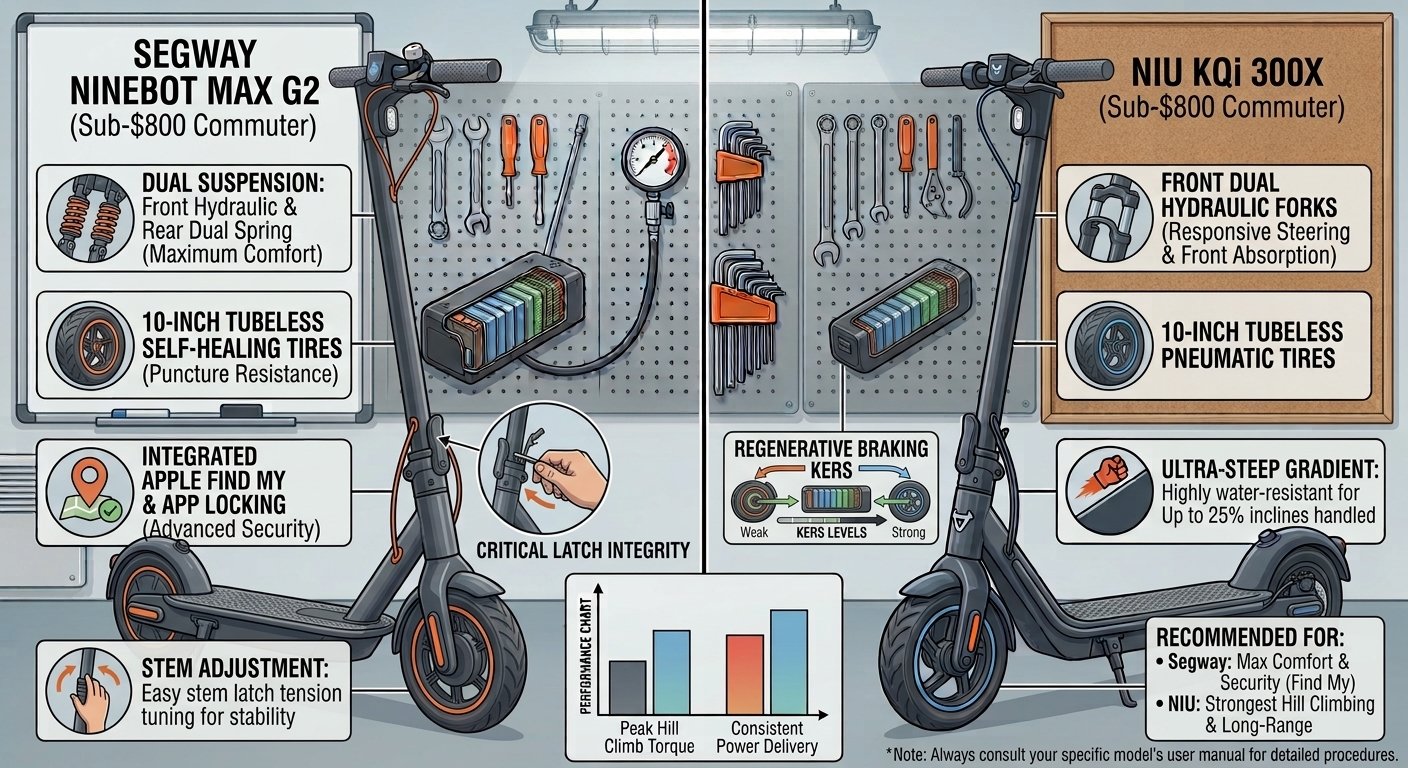
- Dual Suspension (Hydraulic Front + Rear Spring): The Segway Max G2 uses a full dual system. It provides optimal shock absorption over cobblestones, cracked pavement, and unexpected potholes.
- Front-Only Hydraulic Suspension: The NIU KQi 300 series features dual front hydraulic forks. This design offers responsive steering and absorbs major front-wheel impacts while reducing overall vehicle weight.
3. Braking Mechanics: Drum Brakes vs. Mechanical Discs
Daily maintenance needs depend heavily on the stopping mechanism chosen by the manufacturer.
- Sealed Drum Brakes: Located inside the wheel hub, drum brakes stay completely protected from dirt, rain, and road debris. They require minimal adjustment over thousands of miles.
- Dual Mechanical Disc Brakes: Offer crisp stopping power and better heat dissipation during long downhill descents. However, pads require regular manual tightening and periodic replacement.
4. Portability and Weight Constraints
Commuters who combine scooter rides with public transit or need to carry their vehicle upstairs must consider physical dimensions and weight.
- Weight Distribution: Heavy-duty scooters with full suspension typically weigh between 48 lbs and 54 lbs (22 kg – 24.5 kg).
- Folding Mechanisms: Look for robust single-action folding latches with safety locks to eliminate stem play while ensuring quick folding in transit centers.
Essential Buying Checklist
| Feature | Primary Benefit | Recommended Target (Under $800) |
| Real-World Range | Prevents daily range anxiety | 20–28 miles in Sport Mode |
| System Voltage | Consistent acceleration & speed | 48V preference for hilly routes |
| Tires | Prevents sudden flat tires | 10-inch tubeless / self-healing gel |
| Security | Theft recovery and motor locking | Integrated Apple Find My / App Locking |