

When buying or maintaining a motorcycle, one of the most critical mechanical decisions revolves around how fuel reaches your engine. The ongoing debate of carburetor vs fuel injection has divided riders for years. Old-school enthusiasts swear by the simplicity of a carburetor, while modern commuters demand the precision of electronic fuel injection (EFI).
If you are trying to understand how these systems affect your wallet over time, you are in the right place. This guide delivers an in-depth carburetor vs fuel injection comparison, focusing directly on long-term maintenance costs, tuning requirements, and overall engine lifespan.
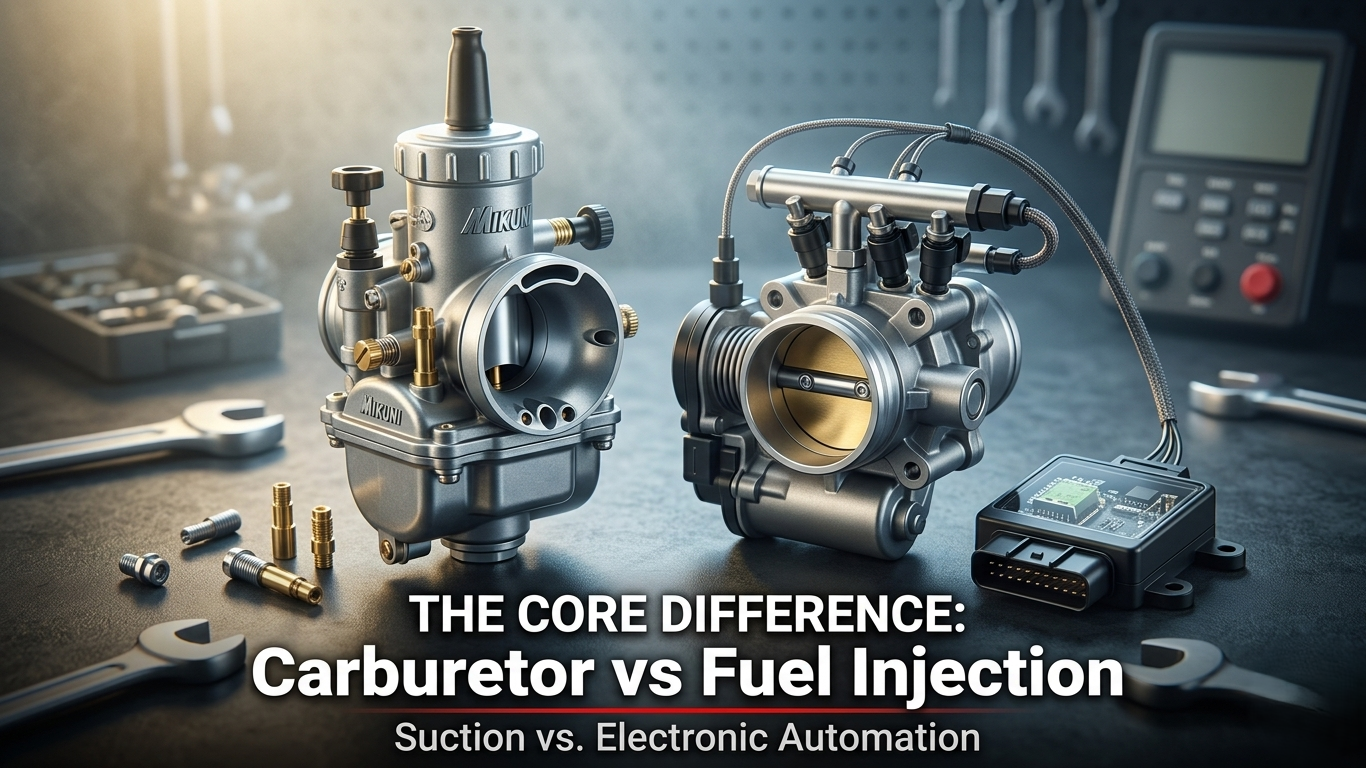
The Core Difference: Carburetor vs Fuel Injection
To understand the maintenance scope, we must first look at how both systems work. In the battle of carburetor vs fuel injection, the main difference lies in mechanical suction versus electronic automation.
- Carburetors: This system relies on a purely mechanical device that uses the vacuum created by the engine to pull a mixture of air and fuel into the cylinder. It uses physical brass jets to regulate the fuel flow.
- Fuel Injection (EFI): This is a highly advanced system that utilizes an Electronic Control Unit (ECU) alongside sensors to spray a precise mist of fuel directly into the combustion chamber via an electronic injector.
Maintenance Guide: Which System is Easier to Fix?
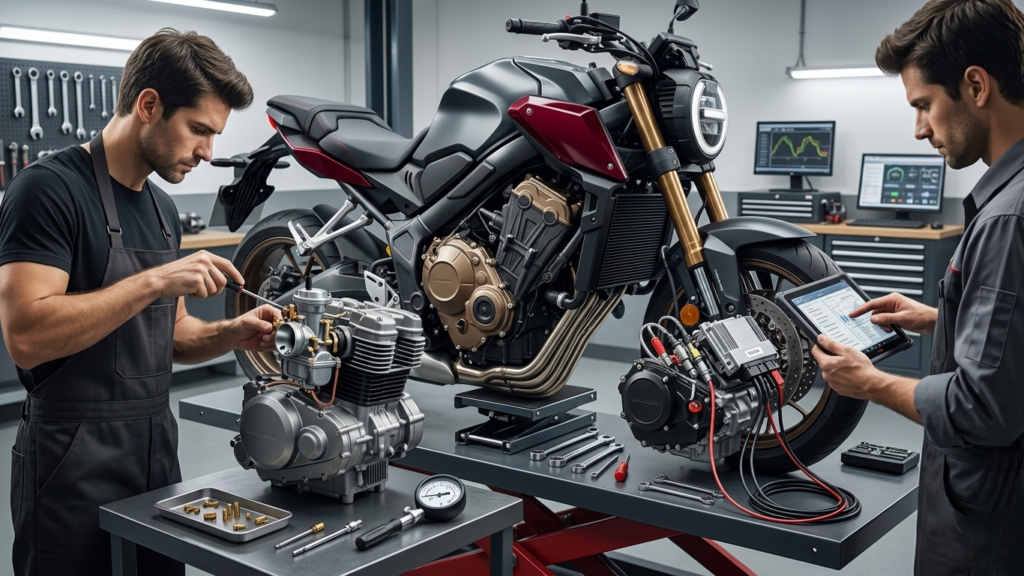
Maintenance complexity is the defining factor for daily commuters when analyzing carburetor vs fuel injection systems.
A carburetor is mechanically simple. If it gets clogged by dirty fuel, almost any local mechanic can open it up, clean the jets, and re-tune it using basic screwdrivers. However, carburetors require regular cleaning, jet adjustments for different weather conditions, and synchronization if you ride a multi-cylinder bike.
Electronic Fuel Injection systems are virtually maintenance-free on a day-to-day basis. There are no manual screws to turn, and the ECU automatically adjusts the fuel mixture according to the temperature. However, if a fuel injector or sensor fails, you cannot fix it on the roadside. You will need specialized diagnostic tools and computers to identify the issue, similar to how digital electronics require a scooter error code guide to troubleshoot sensor system failures.
The Verdict: Carburetors require frequent but cheap maintenance. Fuel injection requires zero routine maintenance, but fixes are costly when components fail.
Lifespan and Reliability: Which System Lasts Longer?
When comparing the durability of carburetor vs fuel injection, we have to look at physical wear versus electrical breakdown.
Durability of Carburetors
A carburetor can easily last the entire lifetime of a motorcycle engine because it has almost no moving electrical parts. The metal housing doesn’t degrade easily. However, its weakest point is rubber gaskets and O-rings, which dry out over time and cause fuel leaks. Furthermore, if a bike sits idle for months, the fuel inside the bowl turns into a thick varnish, clogging the system completely.
Durability of Fuel Injection (EFI)
An EFI system offers incredible structural reliability. The fuel lines are completely sealed, preventing fuel from oxidizing or evaporating when the motorcycle is parked for long periods. However, electronic components have a natural shelf life. Extreme heat, moisture, or battery voltage drops can cause sensors to glitch or burn out over time. Just like electronic devices face degradation or battery life drops in cold weather, an EFI system is highly dependent on a perfectly healthy electrical circuit to maintain its performance.
Fuel Efficiency and Real-World Performance
Beyond maintenance, the carburetor vs fuel injection dynamic directly impacts your daily running costs.
Because an EFI system constantly monitors air temperature, engine load, and throttle position, it never wastes a single drop of petrol. This results in crisper throttle response, seamless cold-morning starts, and roughly 10% to 15% better fuel economy compared to a carbureted counterpart of the same engine capacity.

Head-to-Head: Carburetor vs Fuel Injection Comparison
| Feature | Carburetor System | Fuel Injection (EFI) |
| Operation Type | Completely Mechanical | Electronic (ECU-Controlled) |
| Cold Starts | Requires Manual Choke | Automatic Adjustment |
| Fuel Economy | Moderate | Highly Optimized |
| DIY Repairs | Very Easy | Complex (Requires Computers) |
| Long Idle Storage | High risk of clogging | Completely Safe |
Conclusion: The Right Choice for Modern Riders
To sum up the carburetor vs fuel injection comparison, your choice depends on your technical comfort level.
- Stick with a Carburetor if: You love working on your own machine, live in a remote area without advanced workshop support, and want a simple bike that can be repaired with low-cost tools.
- Upgrade to Fuel Injection if: You want a reliable daily commuter that starts instantly in freezing winter weather, offers maximum fuel efficiency, and frees you from ever visiting a mechanic for routine engine tuning.
Frequently Asked Questions (FAQs)
Can you convert a carburetor motorcycle to fuel injection?
While it is technically possible with aftermarket conversion kits, it is highly expensive and complex. You would need to add an ECU, a high-pressure fuel pump, wiring looms, and multiple engine sensors, making it cheaper to simply buy an EFI motorcycle.
Why does my carbureted bike stall in the morning?
Carburetors cannot automatically adjust to cold temperatures. When the engine is cold, fuel sticks to the cold cylinder walls instead of vaporizing. You must use the manual choke lever to restrict airflow and enrich the fuel mixture until the engine warms up.