
Commuting on a budget electric scooter like the Segway Ninebot Max G2 or NIU KQi 300X offers a cost-effective, agile way to navigate city traffic. However, sharing the road with pedestrians, cyclists, and passenger vehicles requires defensive riding habits, appropriate protective gear, and an understanding of urban micromobility laws.
1. Essential Safety Gear Checklist
Protective equipment is the primary line of defense against unexpected falls, sudden vehicle doors opening, or slick road surfaces.
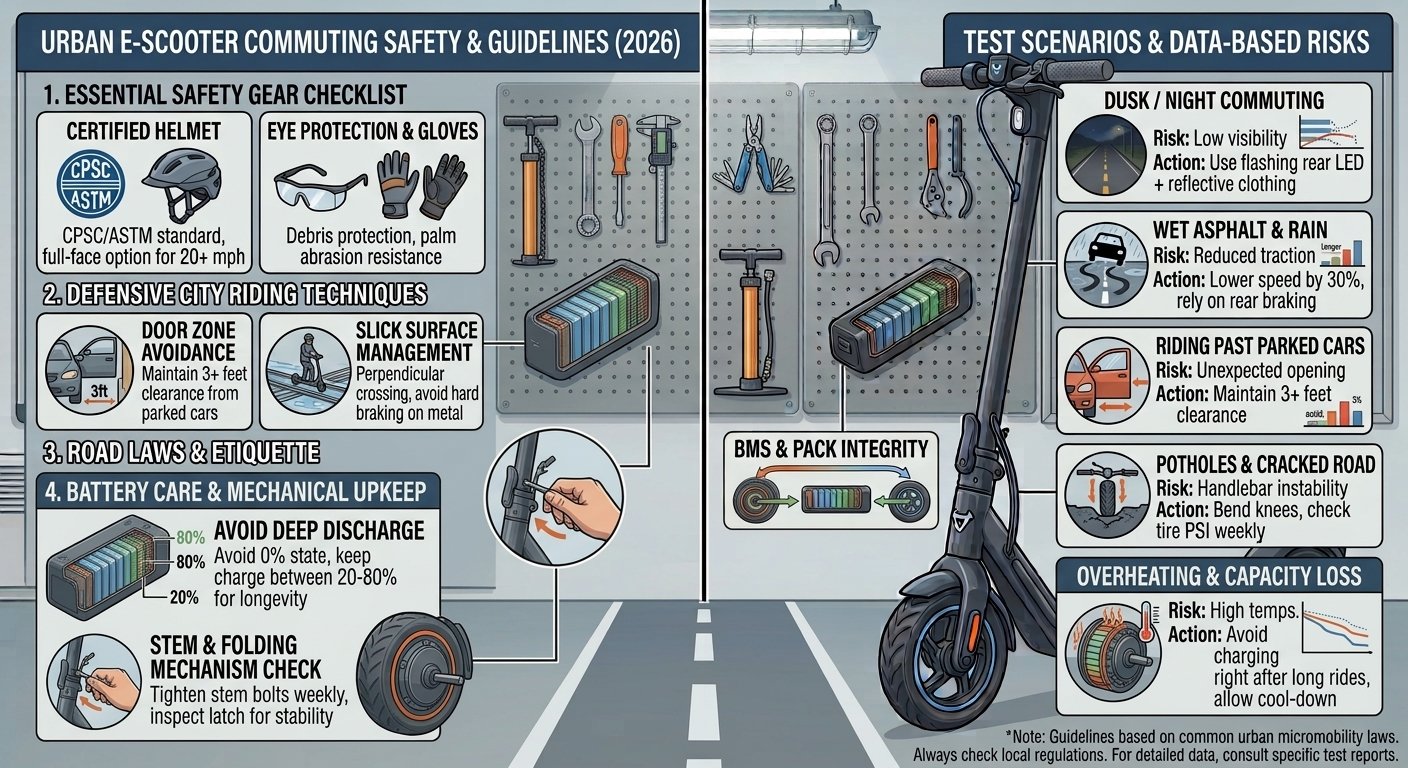
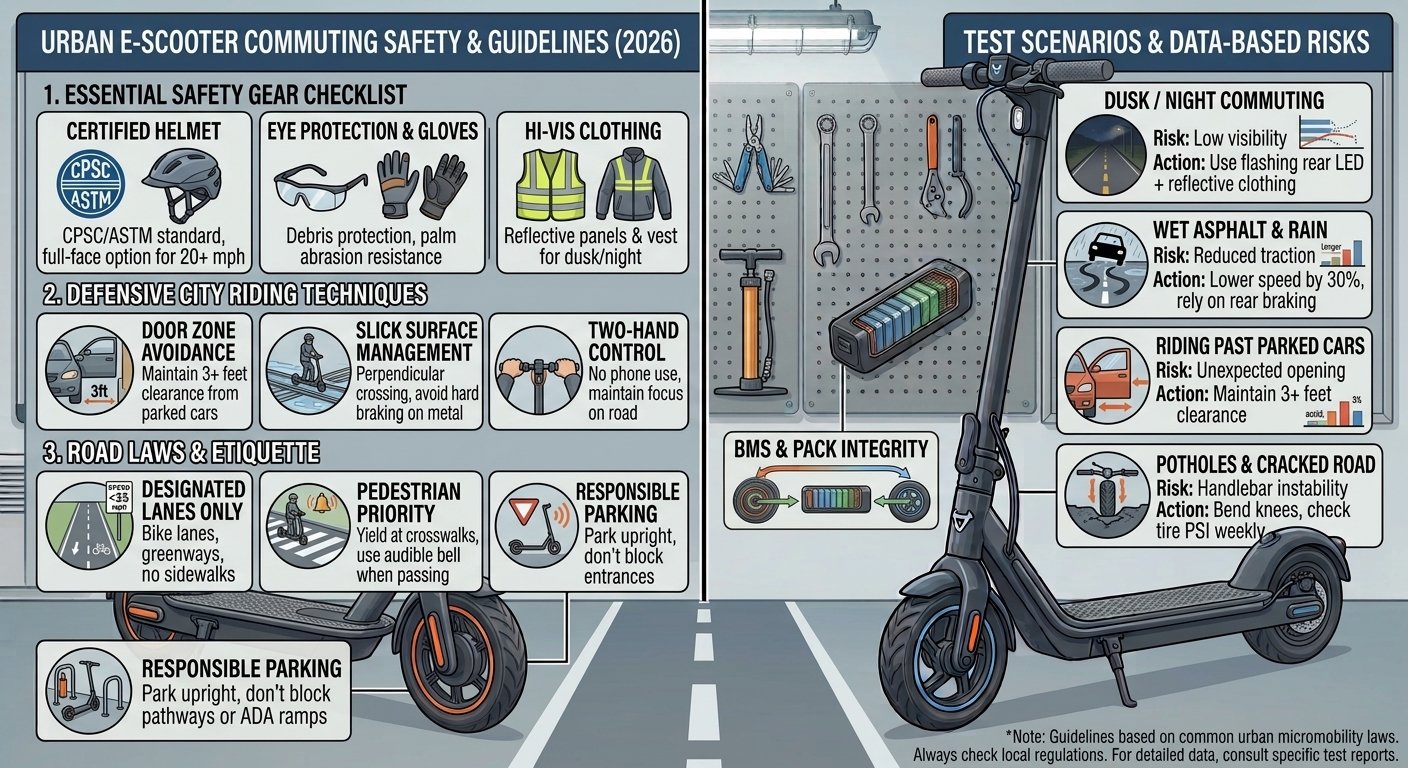
- Certified Helmet: Always wear a helmet rated by safety standards like CPSC, ASTM, or CE. Standard bicycle helmets work well for speeds up to 20 mph, while full-face helmets provide added chin and facial protection for higher-speed commuter routes.
- Eye Protection & Gloves: Clear shatterproof glasses protect eyes from wind, insects, and kicked-up street debris. Reinforced motorcycle or cycling gloves prevent palm abrasion during low-speed slides and improve handlebar grip.
- High-Visibility Outerwear: Over 40% of micromobility accidents occur during dusk or night hours. Complement integrated LED headlights with reflective vests, high-visibility jacket panels, or clip-on helmet lights.
2. Defensive City Riding Techniques
Riding safely requires anticipating hazards before they materialize.
- Avoiding the “Door Zone”: Keep at least 3 feet of distance from parked cars along curb lanes to avoid opening car doors or stepping pedestrians.
- Managing Slick & Uneven Surfaces: Metallic utility covers, painted lane markers, wet leaves, and tram tracks become extremely slippery when wet. Cross track gaps at a perpendicular angle (90 degrees) and avoid hard front-wheel braking on wet paint.
- Two-Hand Control & Focus: Maintain both hands firmly on the handlebars at all times. Never attempt one-handed phone navigation or texting while moving.
3. Road Laws, Sidewalk Etiquette, and Parking Rules
Understanding regional regulations prevents traffic fines and keeps pedestrian spaces accessible.
- Ride in Designated Lanes: Utilize bike lanes, greenways, and city roads with posted speed limits under 35 mph. Riding on sidewalks is illegal in most major metropolitan jurisdictions.
- Pedestrian Priority: Yield the right-of-way to pedestrians at crosswalks and intersections. Use a audible bell or chime to announce your presence when passing cyclists or pedestrians from behind.
- Responsible Parking Habits: Park scooters upright using the kickstand in designated parking zones or near bike racks. Avoid blocking building entrances, ADA wheelchair ramps, sidewalk pathways, or bus stops.
Quick Commuter Safety Matrix
| Scenario | Primary Risk | Preventative Action |
| Dusk / Night Commuting | Low driver visibility | Use flashing rear LED + reflective clothing |
| Wet Asphalt & Rain | Reduced tire traction & longer stop distance | Lower speed by 30% and rely on rear braking |
| Riding Past Parked Cars | Unexpected car door opening | Maintain 3+ feet clearance from vehicle doors |
| Potholes & Cracked Road | Handlebar instability or pinch flat | Bend knees to absorb shock and check tire PSI weekly |