

Choosing the right motorcycle for your daily travel can save you thousands of rupees in fuel and maintenance costs. When exploring the market, the ultimate showdown usually comes down to 150cc vs 200cc bikes. Both engine capacities cater to everyday riders, but they offer completely different experiences on the road.
If you are confused about which engine displacement size fits your routine, this detailed 150cc vs 200cc bikes comparison will break down the fuel economy, power output, monthly maintenance, and long-term reliability to help you make the right choice.
Understanding the Basics: 150cc vs 200cc Bikes
Before checking the performance statistics, it is vital to understand what these numbers mean for your daily motorcycle commute. The “cc” stands for cubic centimeters, which measures the volume of the engine cylinder. A larger cylinder can burn more fuel and air, resulting in higher power.
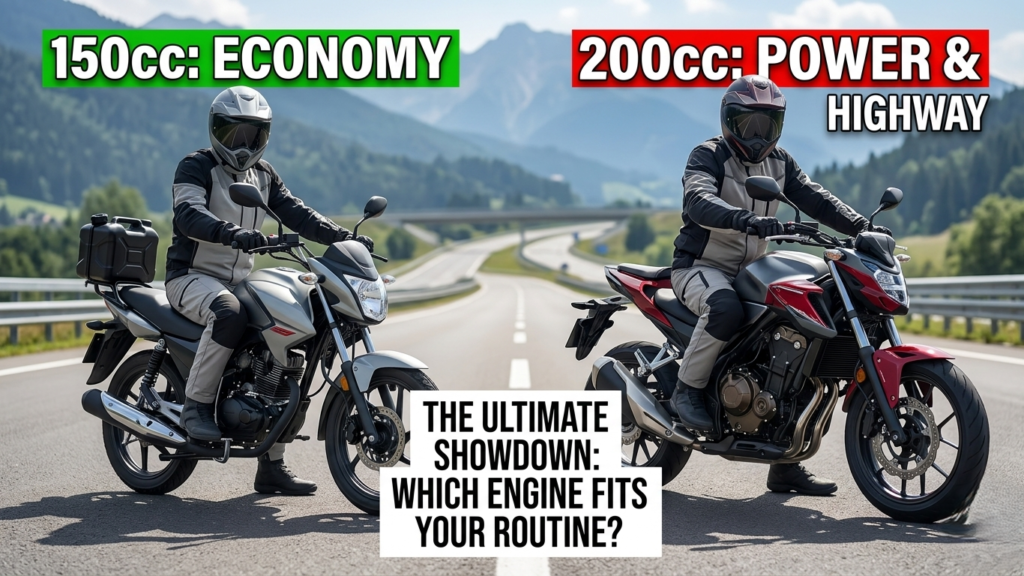
- 150cc Motorcycles: These are engineered primarily for economy, lightweight handling, and effortless city filtering.
- 200cc Motorcycles: These entry-level performance machines bridge the gap between daily city commuting and occasional long-distance highway travel.
Fuel Efficiency: Which Engine Saves More Money?
When evaluating 150cc vs 200cc bikes, fuel mileage is usually the biggest deciding factor for commuters.
A 150cc engine is highly optimized for [fuel efficiency]. On average, a standard 150cc motorcycle delivers between 45 to 55 km/l, depending on your riding style and city traffic conditions. Because the engine burns less fuel per piston stroke, it keeps your monthly petrol expense incredibly low.
On the other hand, a 200cc engine prioritizes acceleration and throttle response over strict fuel conservation. A typical 200cc bike offers a mileage of 35 to 42 km/l. While the difference looks small on paper, it adds up significantly if your daily travel exceeds 40 kilometers.
The Verdict: If saving money at the petrol pump is your main priority, 150cc engines win the 150cc vs 200cc bikes economy battle.
Engine Power and City Performance
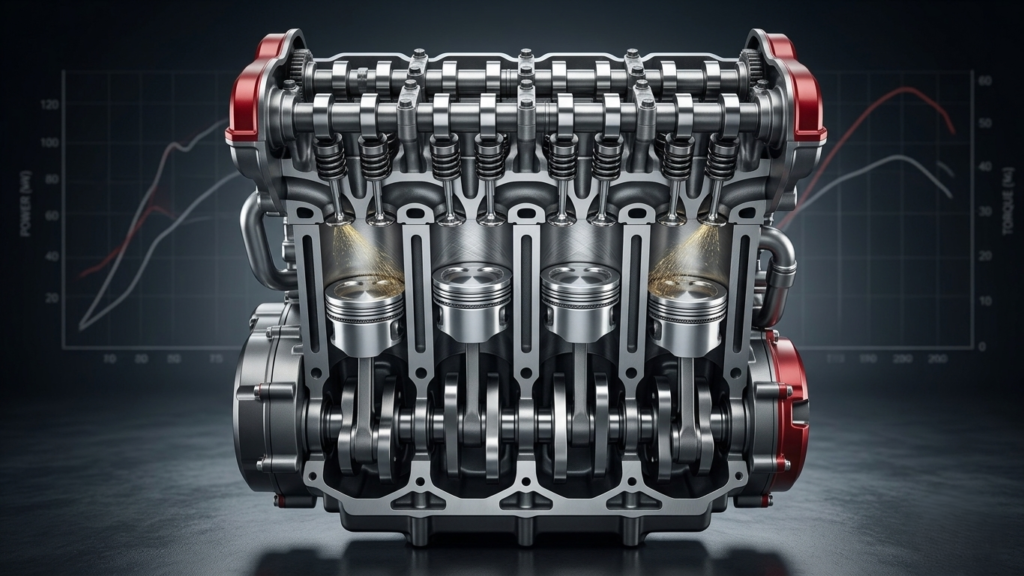
While 150cc models save fuel, they sometimes feel underpowered when you need to make quick overtakes on busy main roads or expressways. A 150cc bike usually produces around 12 to 14 horsepower, which is sufficient for steady riding but can struggle with a heavy passenger (pillion rider) on steep flyovers.
This is exactly where the 150cc vs 200cc bikes dynamic shifts. A 200cc motorcycle produces between 18 to 24 horsepower. This extra power gives you:
- Faster initial acceleration to pull away from traffic lights.
- Better stability at higher speeds (80-100 km/h) without heavy engine vibrations.
- Superior torque when carrying extra weight or cargo.
Maintenance Costs and Longevity
Rank Math users often ask about the long-term cost of ownership when comparing 150cc vs 200cc bikes.
150cc Maintenance Scope
The components of a 150cc motorcycle are mass-produced and highly affordable. Spare parts like [spark plugs], air filters, and brake pads are cheap, and almost any local mechanic can fix technical issues. They also use standard mineral engine oils, keeping routine service bills minimal.
200cc Maintenance Scope
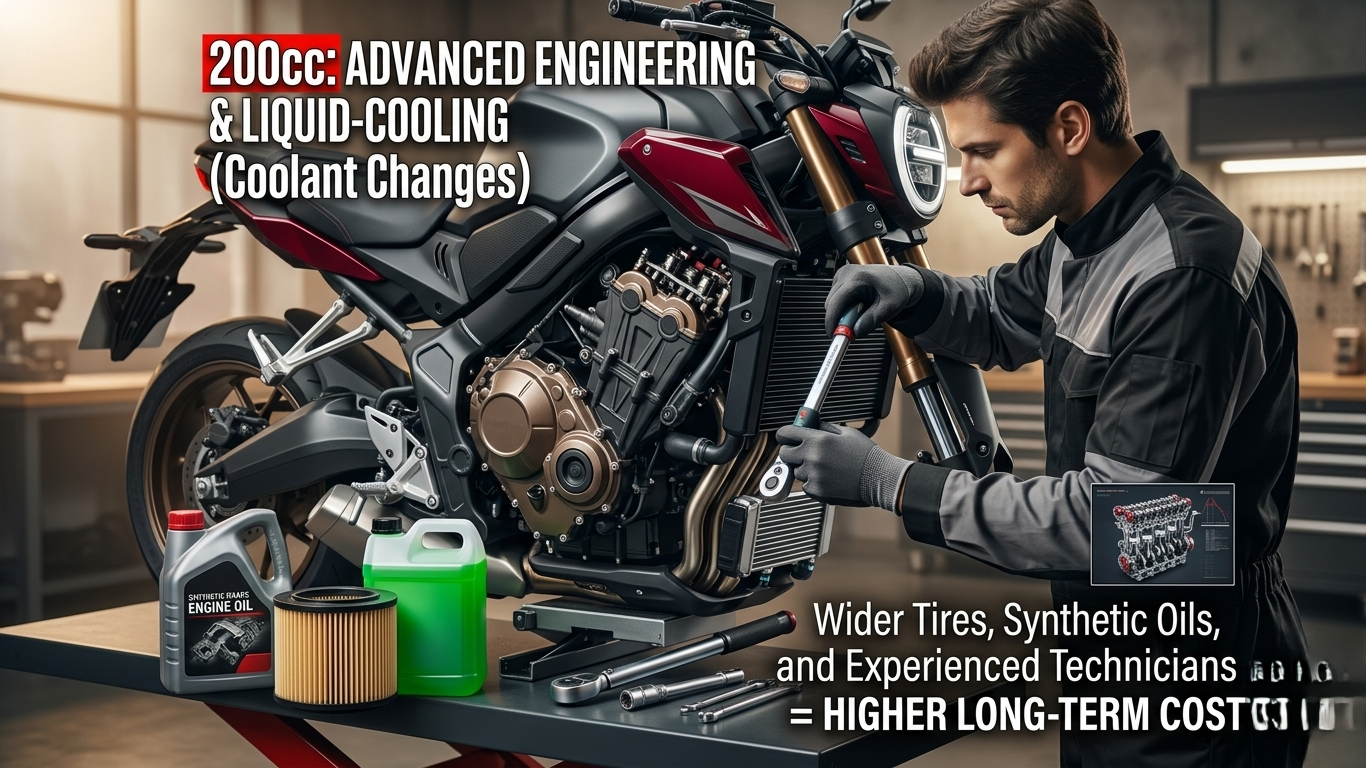
A 200cc motorcycle features more sophisticated engineering. Many models in this category use liquid-cooling systems (which require coolant changes) and specialized synthetic engine oils. The tires are wider and more expensive to replace, and the complex electronics require experienced technicians.
150cc vs 200cc Bikes: Head-to-Head Comparison Table
| Feature | 150cc Bikes | 200cc Bikes |
| Average Mileage | 45 – 55 km/l | 35 – 42 km/l |
| Top Speed Range | 100 – 110 km/h | 125 – 140 km/h |
| Cooling System | Air-Cooled | Air/Oil or Liquid-Cooled |
| Ideal For | Tight city traffic & budget riders | Highway commutes & speed lovers |
| Maintenance Cost | Inexpensive | Moderate to High |
Final Verdict: Which One Should You Buy for Your Commute?
To settle the 150cc vs 200cc bikes debate, you must analyze your specific daily route conditions.
- Choose a 150cc bike if: Your daily commute consists of heavy bumper-to-bumper city traffic, your average speed stays below 60 km/h, and your primary goal is to achieve maximum fuel economy with low maintenance costs.
- Choose a 200cc bike if: Your commute involves long stretches of open highways or bypass roads, you frequently ride with a passenger, and you want a bike that handles weekend touring alongside your daily office runs.
Frequently Asked Questions (FAQs)
Is a 150cc bike safe for highway commuting?
Yes, a 150cc bike can handle highways, but it will cruise near its maximum limit, causing high vibrations. For consistent highway commuting, a 200cc bike is much safer and more stable against crosswinds.
Do 200cc engines overheat faster in traffic?
Modern 200cc bikes use advanced cooling systems like oil-cooling or liquid-cooling to manage heat. However, in extreme stop-and-go city traffic, they will emit more noticeable heat near your legs compared to a simpler air-cooled 150cc engine.